Choosing between liability-only and "full coverage" is one of the few auto insurance decisions where you can save real money or expose yourself to real risk in a single click. The right choice depends on what your car is worth, what you owe on it, where you live, and how much cash you'd have to come up with if something happened tomorrow. Here is the framework most insurance agents use, plus the math you need to apply it to your own situation.

What Is Liability-Only Insurance?
A liability-only policy carries the two coverages that nearly every state requires you to have to legally drive: bodily injury liability and property damage liability.
- Bodily injury (BI) liability pays the medical bills, lost wages, and pain and suffering of people you injure in an accident you caused, up to your policy limits.
- Property damage (PD) liability pays for damage you cause to other people's vehicles, fences, mailboxes, buildings, or other property.
Liability does not pay to fix or replace your own car, no matter who is at fault. It does not pay your medical bills if the accident is your fault. It does not cover theft, vandalism, hail, or hitting a deer.
Most states publish minimum required limits in a shorthand like 25/50/25, meaning $25,000 per person for bodily injury, $50,000 per accident, and $25,000 for property damage. State minimums are almost always too low for any driver with assets to protect. A typical recommendation is at least 100/300/100, and 250/500/250 if you own a home or have meaningful savings.
What Is "Full Coverage"?
"Full coverage" is a colloquial industry term, not a legal product. It is not a single policy you buy. When agents and websites use the phrase, they typically mean a policy that bundles three coverages:
- Liability (the BI and PD limits described above).
- Collision coverage, which pays to repair or replace your own vehicle when you hit another car or object, regardless of fault, minus your deductible.
- Comprehensive coverage (sometimes called "other than collision"), which pays for non-collision damage like theft, vandalism, hail, fire, flooding, falling objects, and animal strikes, minus your deductible.
A "full coverage" policy may also include uninsured/underinsured motorist (UM/UIM), medical payments or PIP, rental reimbursement, and roadside assistance, but those are technically optional add-ons. The label "full coverage" is misleading because no policy covers everything. There is always a deductible, always limits, and always exclusions.
The 10 Percent Rule for Dropping Collision and Comprehensive
The most widely used rule of thumb among insurance professionals: consider dropping collision and comprehensive when the annual cost of those two coverages is more than 10 percent of your car's actual cash value (ACV).
The math is simple. Look at your declarations page and find what you pay for collision and comp combined per year. Then look up your car's actual cash value (a quick KBB or Edmunds private-party value works as an estimate). If the ratio is high, the math is probably against you.
Example: a paid-off 2014 sedan worth $5,000 with $700 in annual collision and comp premiums (14 percent ratio) is a strong candidate to drop those two coverages. A 2022 SUV worth $32,000 with $1,400 in collision and comp (4.4 percent ratio) is not.
Why 10 percent? Because over time you'll spend more on premiums than the insurer will ever pay you out, especially after deductibles. If your $5,000 car is totaled and your deductible is $1,000, the maximum payout is $4,000. Three years of $700 premiums equals $2,100 in cost just to be eligible for that $4,000 check.
Lender and Lessor Requirements
If you have an auto loan or lease, the choice may not be yours. Lenders and leasing companies almost always require you to carry collision and comprehensive coverage for the entire term, because the vehicle is the collateral securing their loan. Their requirements typically include:
- Collision and comprehensive coverage with a deductible no higher than $500 or $1,000.
- The lender or lessor named as a "loss payee" or "additional insured" on the policy.
- Notification to the lender if the policy lapses or coverage changes.
If you let collision or comp lapse on a financed car, the lender will eventually buy "force-placed" insurance for you and add the cost (often double or triple market rates) to your loan balance. Force-placed insurance also typically protects only the lender, not you, so if your car is totaled you could still owe the loan balance and have nothing to drive.
Lessors may also require higher liability limits, often 100/300/50 or 100/300/100, regardless of state minimums. Read the lease.
When Liability-Only Is Enough
Liability-only is the better mathematical choice when the worst-case loss to your own vehicle is small enough that you can absorb it without borrowing money. That usually applies to:
- Older paid-off cars, especially those worth under $4,000 to $5,000.
- Low-mileage vehicles you mostly drive locally and could replace with cash.
- Backup or seasonal vehicles that aren't your only way to get to work.
- Drivers with substantial savings who can self-insure the vehicle and would rather absorb the small risk in exchange for the premium savings.
Even if you choose liability-only, do not cut your liability limits to the state minimum. Bodily injury claims that exceed your limits become your personal responsibility. A serious accident can produce a five- or six-figure judgment that follows you for years. Carrying solid 100/300/100 liability with no collision is usually a smarter trade-off than cutting your liability to save the same money.
When Full Coverage Makes Sense
Full coverage is the better choice when the risk of paying out of pocket is bigger than the risk of overpaying for premium. That usually applies to:
- Newer vehicles still worth $10,000 or more.
- Financed or leased vehicles where you don't actually have a choice.
- Drivers who could not afford to replace the car tomorrow if it were totaled.
- High-collision-risk areas: dense cities, regions with extreme weather, hailstorm-prone states like Texas or Colorado, or places with a high rate of vehicle theft.
- Long commutes or high-mileage drivers whose statistical risk of a collision is materially higher than average.
If you're on the fence, raising your deductible from $500 to $1,000 or even $1,500 will often cut your collision and comp premium by 15 to 25 percent while keeping the catastrophic protection of a total-loss payout. That's frequently a better trade than dropping the coverage entirely.
Real-World Cost Comparisons
Premiums vary enormously by state, age, credit, and driving record, but a useful national mental model: a "full coverage" policy on a 5-year-old midsize sedan for a 35-year-old driver with a clean record averages roughly $1,700 to $2,200 per year. A liability-only policy on the same car for the same driver averages roughly $700 to $900. The "full coverage" premium is typically two to three times the liability-only premium for the same driver and limits.
Translate that to your situation: if dropping collision and comp on your $5,000 car saves you $900 a year, the breakeven is about 5.5 years before you've saved more than the maximum payout you'd ever receive. That's why the 10 percent rule generally points to dropping coverage on cars that age into the high-mileage, low-value range.
A Decision Framework in Five Questions
- Do I owe money on the car? If yes, you must keep collision and comp. Stop here.
- What is my car worth today? Check KBB, Edmunds, or Carvana for an instant estimate.
- What does collision and comp cost me on my current policy? Find it on your declarations page.
- What is the ratio? Annual collision plus comp divided by car value. If the ratio exceeds 10 percent, dropping is on the table.
- Could I write a check to replace the car tomorrow? If yes, dropping is reasonable. If no, keep coverage and consider raising the deductible instead.
The Bottom Line
Liability-only is cheaper, simpler, and the right call for older paid-off cars whose value has dropped below the cost of insuring them. "Full coverage" is mandatory on a financed or leased car and usually the right call for any newer vehicle you'd struggle to replace. Almost no driver should carry only their state minimum liability, regardless of what else is on the policy: state minimums are too low to protect any meaningful asset.
Run the 10 percent test once a year, raise your deductibles before dropping coverage, and re-quote your policy at renewal. The right answer changes as your car ages, your equity grows, and your life circumstances shift. Reviewing it on schedule is the cheapest way to make sure you're paying for protection you actually need, not coverage you've outgrown.
Related Articles
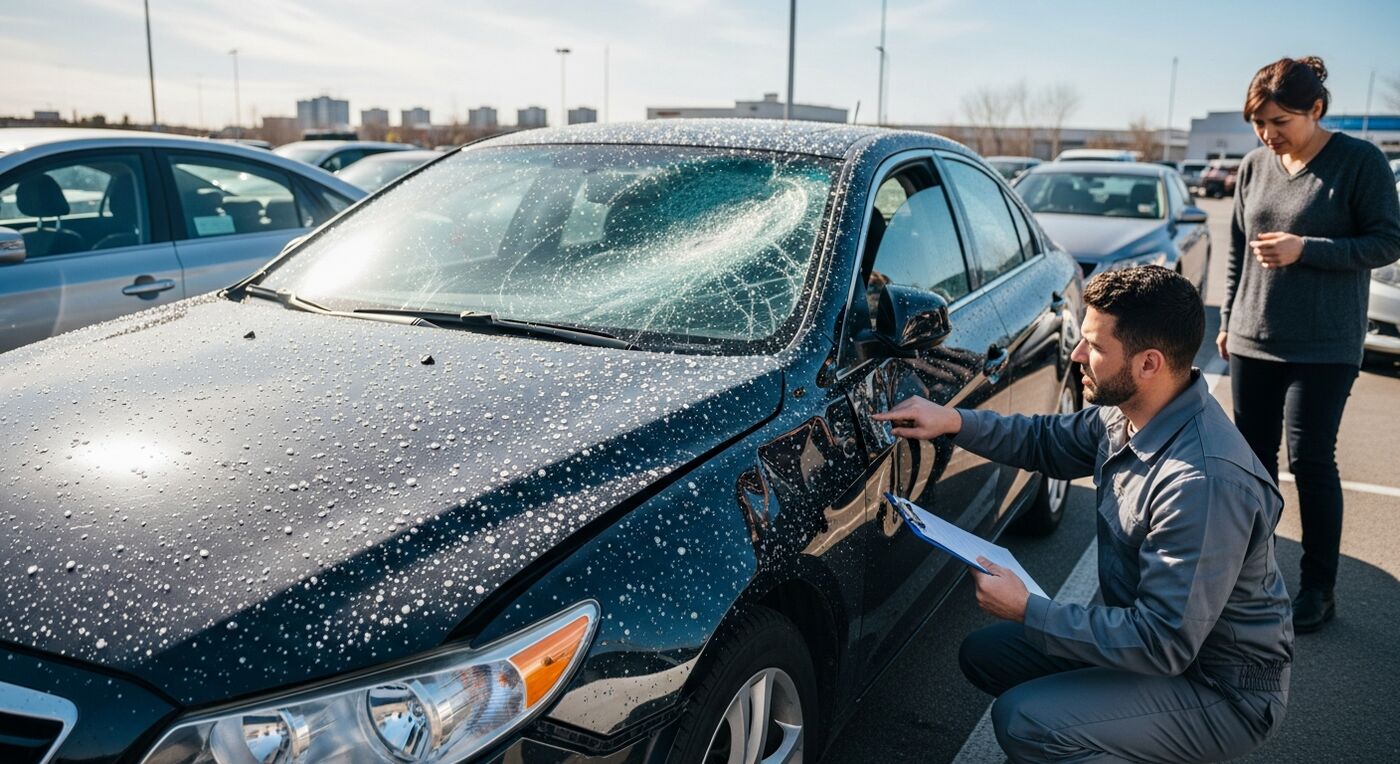
Comprehensive vs. Collision Coverage
The two physical damage coverages explained: which one pays when, and when each is worth keeping on your policy.
Understanding Auto Insurance Coverage Types
A field guide to every line on your policy: liability, collision, comp, UM/UIM, PIP, and the optional add-ons.
State Minimum Auto Insurance Requirements
The required liability limits in every state, and why state minimums are rarely enough coverage for most drivers.