A car accident is stressful even when no one is hurt. In the moments after a crash, adrenaline makes it easy to forget steps that protect your health, your wallet, and your insurance claim. This guide walks you through exactly what to do at the scene, how to document what happened, what to say (and what not to say), and how to handle police reports, insurers, and the inevitable aftermath. Print it, save it to your phone, and keep it in your glove box.
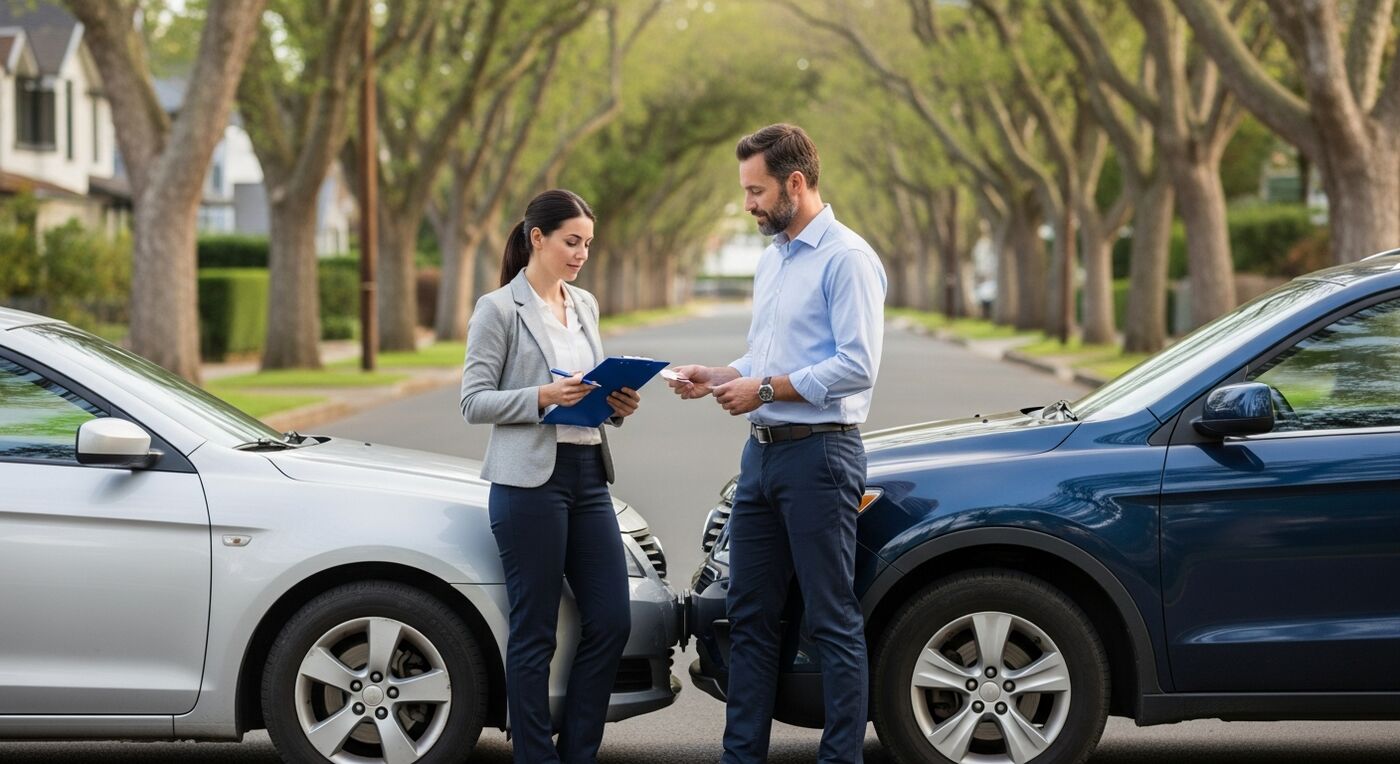
Step 1: Stop, Stay Calm, and Check for Injuries
It is illegal in every state to leave the scene of an accident you were involved in, even a minor one. Stop your vehicle immediately. Take a breath, then check yourself and any passengers for injuries. Adrenaline can mask serious pain, so don't assume you're fine just because nothing hurts in the first sixty seconds.
If anyone is injured, do not move them unless they are in immediate danger from fire or oncoming traffic. Moving someone with a spinal injury can make things much worse. Call 911 right away.
Step 2: Get to Safety and Make the Scene Visible
If your car is drivable and the accident was minor, move to the shoulder, a parking lot, or another safe location off the travel lanes. Many states explicitly require drivers to clear traffic lanes when possible after a minor crash. If your vehicle won't move, leave it where it is and get yourself to safety.
- Turn on your hazard lights immediately.
- Set out reflective triangles or road flares if you have them, especially at night or in poor visibility.
- Turn off your engine to reduce fire risk if there are visible leaks or smoke.
- Stay out of travel lanes. Secondary collisions with other drivers passing the scene are a leading cause of post-accident injuries.
Step 3: Call 911
Call 911 even if the accident seems minor. The dispatcher will determine whether police, EMS, or both should respond. Many states require you to report any accident involving injury, death, or property damage above a threshold (often $500 to $2,500 depending on the state). When in doubt, report it.
A police report creates an objective record of the incident and is invaluable when filing a claim. If officers don't come to the scene because the damage is minor, ask the dispatcher how to file a counter report or self-report at a local station within the required time window.
Step 4: Document Everything at the Scene
Your phone is the single best tool you have right now. Take far more photos and video than you think you need. You can never go back to recreate the scene later.
Photos to take
- Wide shots of the entire scene from multiple angles, including skid marks, debris, and final vehicle positions.
- Close-ups of every area of damage on every vehicle involved.
- License plates of all vehicles.
- The other driver's driver's license, insurance card, and vehicle registration. Photograph them rather than copying numbers by hand.
- Street signs, traffic signals, and any visible road conditions (potholes, ice, construction).
- The other driver's face, if they consent, so you can identify them later.
- Any visible injuries on you or passengers.
Information to collect
- Driver's full name, address, phone number, and date of birth.
- Driver's license number and issuing state.
- Insurance company name, policy number, and the phone number on the insurance card.
- Vehicle make, model, year, color, and license plate number.
- Names and contact information of any passengers in the other vehicle.
- Names and phone numbers of any witnesses, before they leave.
- The responding officer's name, badge number, and the police report number.
Step 5: What Not to Do
What you say in the first hour after a crash can shape your claim for months. A few common mistakes:
- Don't admit fault, apologize, or speculate. Even a polite "I'm so sorry" can be used against you. Stick to facts: where you were going, the speed limit, the color of the light. Let investigators determine fault.
- Don't accept an early cash offer from the other driver. Some drivers offer to "settle this in cash" to avoid an insurance claim. The damage you can see at the scene is often a fraction of the real cost once a body shop pulls the bumper or runs diagnostics.
- Don't sign anything from the other driver or a stranger. Never sign a release, statement, or quick settlement at the scene. Anything from the other driver's insurer can wait.
- Don't post about the accident on social media. Insurers and defense attorneys monitor public posts. A picture of you smiling at a barbecue two days later can complicate an injury claim.
- Don't refuse medical evaluation if you feel any pain. Soft tissue injuries, concussions, and internal bleeding can take hours or days to surface.
Step 6: File a Police Report
Even when officers don't respond to the scene, file a report at a local station or online. A police report:
- Establishes a date, time, and official record of the incident.
- Captures witness statements while memories are fresh.
- Documents any traffic citations issued, which can be central to fault determination.
- Is required by many insurers for hit-and-run, theft, and uninsured motorist claims.
Get the report number before you leave the scene. You'll need it for your insurer, and you can usually request a copy within a few business days through the local police department's records office or an online portal.
Step 7: Notify Your Insurance Company
Call your insurer or open a claim through their app as soon as you safely can, ideally within 24 hours. Most policies require "prompt" notification, and waiting can give the company grounds to delay or deny coverage. You don't need every detail to start a claim. Provide:
- Date, time, and location of the accident.
- The other driver's information.
- The police report number.
- A factual description of what happened, without speculation about fault.
Your insurer will assign a claim number and an adjuster. Keep that claim number visible. Use it on every email and call.
Step 8: Dealing with the Other Driver's Insurer
The other driver's insurance company will likely call within a day or two. They may sound friendly, but their job is to resolve the claim for as little money as possible. A few rules:
- You are not required to give a recorded statement to the other driver's insurer. Politely decline. Refer them to your own adjuster or attorney.
- Don't sign a medical authorization giving them access to your full medical history. They can use unrelated past conditions to argue your injuries weren't caused by the crash.
- Be cautious with quick settlement offers. If they call within a week offering to "wrap this up" for a few hundred or a few thousand dollars, that's a sign they think the real value is much higher. Don't sign a release until you know the full extent of damage and any injuries.
Step 9: When to Hire a Lawyer
Most fender benders don't require an attorney. But for some accidents, a personal injury lawyer can dramatically improve your outcome. Consider hiring one if:
- You suffered any injury that required more than a single ER visit.
- The other driver is uninsured, underinsured, or fled the scene.
- Fault is disputed or the police report is unfavorable.
- The other driver's insurer is denying or undervaluing your claim.
- You missed work or have ongoing medical treatment.
Most personal injury attorneys offer free consultations and work on contingency, meaning they take a percentage (commonly 30-40 percent) of the settlement and charge nothing if they don't win.
Special Situations
Hit and run
If the other driver flees, do not chase them. Note as much as you can: license plate (even partial), make, model, color, direction of travel, and any descriptors of the driver. Call 911 immediately, file a police report, and contact your insurer. Coverage for hit-and-run damage typically falls under uninsured motorist coverage (for injuries) and collision coverage (for vehicle damage). Some states also allow uninsured motorist property damage to apply.
Single-vehicle accidents
If you hit a deer, slid into a ditch, or struck a guardrail, you'll typically file under collision (for fixed objects) or comprehensive (for animals, weather, falling objects). Single-vehicle accidents are still worth a police report, especially if you hit public property or a parked car.
The other driver is uninsured
About one in eight drivers nationally is uninsured, and rates are higher in some states. If the other driver has no insurance, your uninsured motorist coverage steps in to cover injuries (and in some states property damage). This is one of the most underrated coverages on a policy.
Claim Timelines: What to Expect
Every claim is different, but typical timelines look like this:
- 0-48 hours: File claim, receive claim number, schedule inspection.
- 3-7 days: Adjuster inspects vehicle (or reviews photos via the insurer's app). Initial repair estimate issued.
- 1-3 weeks: Repairs completed for straightforward property damage claims. Rental car typically covered if you have rental reimbursement.
- 1-6 months: Injury claims, especially those involving ongoing treatment, take much longer. Most attorneys advise against settling an injury claim until you've reached "maximum medical improvement."
If your insurer is dragging its feet, your state's department of insurance has a complaint process. Filing a complaint is free and often produces a fast response.
The Bottom Line
The minutes after an accident feel chaotic, but you only need to remember a simple sequence: get safe, call for help, document everything, exchange information, and say very little about fault. Then notify your insurer and let the process unfold. The drivers who fare best after a crash are the ones who stayed calm, took plenty of pictures, and resisted the urge to settle anything on the spot.
One more thing: review your policy this week, before anything happens. Make sure you have uninsured motorist coverage, that your liability limits are high enough to protect your assets, and that you understand your deductibles. The best time to fix a coverage gap is before you need it.
Related Articles

How Auto Insurance Works
Understand premiums, deductibles, and how claims actually move through the system from first call to final payout.
Understanding Auto Insurance Coverage Types
Liability, collision, comprehensive, uninsured motorist and more. Learn what each coverage actually pays for.
SR-22 Insurance Guide
What an SR-22 really is, when you need one, how long you'll carry it, and how it affects your premium.